The Dürnstein castle ruin
A ransomed king, a Swedish demolition, and the best view on the whole route.
A king, disguised, caught anyway
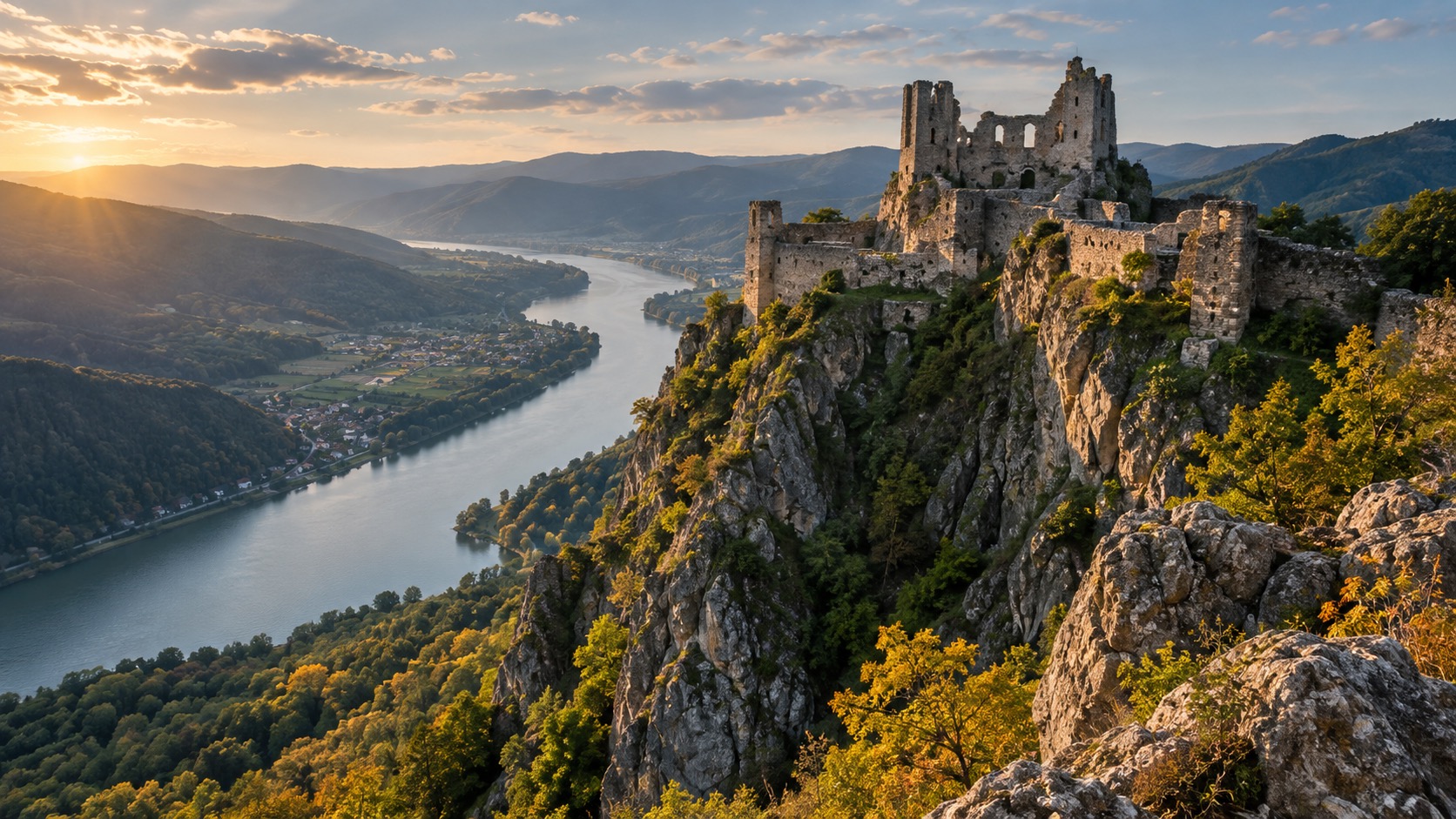
The name Dürnstein enters the historical record because of one specific event. Returning from the Third Crusade in December 1192, Richard I of England — Richard the Lionheart — tried to slip through Austrian territory in disguise. He had made an enemy of Duke Leopold V during the crusade, and disguise or not, he was recognised near Vienna. Leopold had him imprisoned in his own castle at Dürnstein, on a rock directly above the Danube, from 21 December 1192 until March 1193.
Richard's captivity didn't end there — he was later handed to the Holy Roman Emperor and held until a ransom was paid — but Dürnstein is the castle that gets remembered, partly because of the legend of the minstrel Blondel supposedly locating the king by singing outside castle walls across Europe, and partly because the ransom money itself paid for something visible: a share of it funded the expansion of the castle and the village of Dürnstein through the 13th and 14th centuries, under the Kuenring family who controlled it.
Why it's a ruin today
The castle survived the medieval period intact, but not the Thirty Years' War. In 1645, troops of the Swedish Empire under Field Marshal Lennart Torstenson largely destroyed it. It was never rebuilt as a functioning fortress — what's left today is a genuine ruin, not a restoration, which is part of why the walk up feels like reaching an actual medieval site rather than a heritage-tourism reconstruction.
Making the climb
The path starts from the village and climbs steadily for roughly 20–30 minutes depending on pace — steeper than anything else on the route that isn't the hill up to Melk Abbey. There's no bike-friendly way up; this is a walk, which means leaving the bike locked in the village. The payoff is a clear view down the Danube in both directions, with the vineyard terraces and the blue tower of Dürnstein's Baroque church directly below.