Melk Abbey
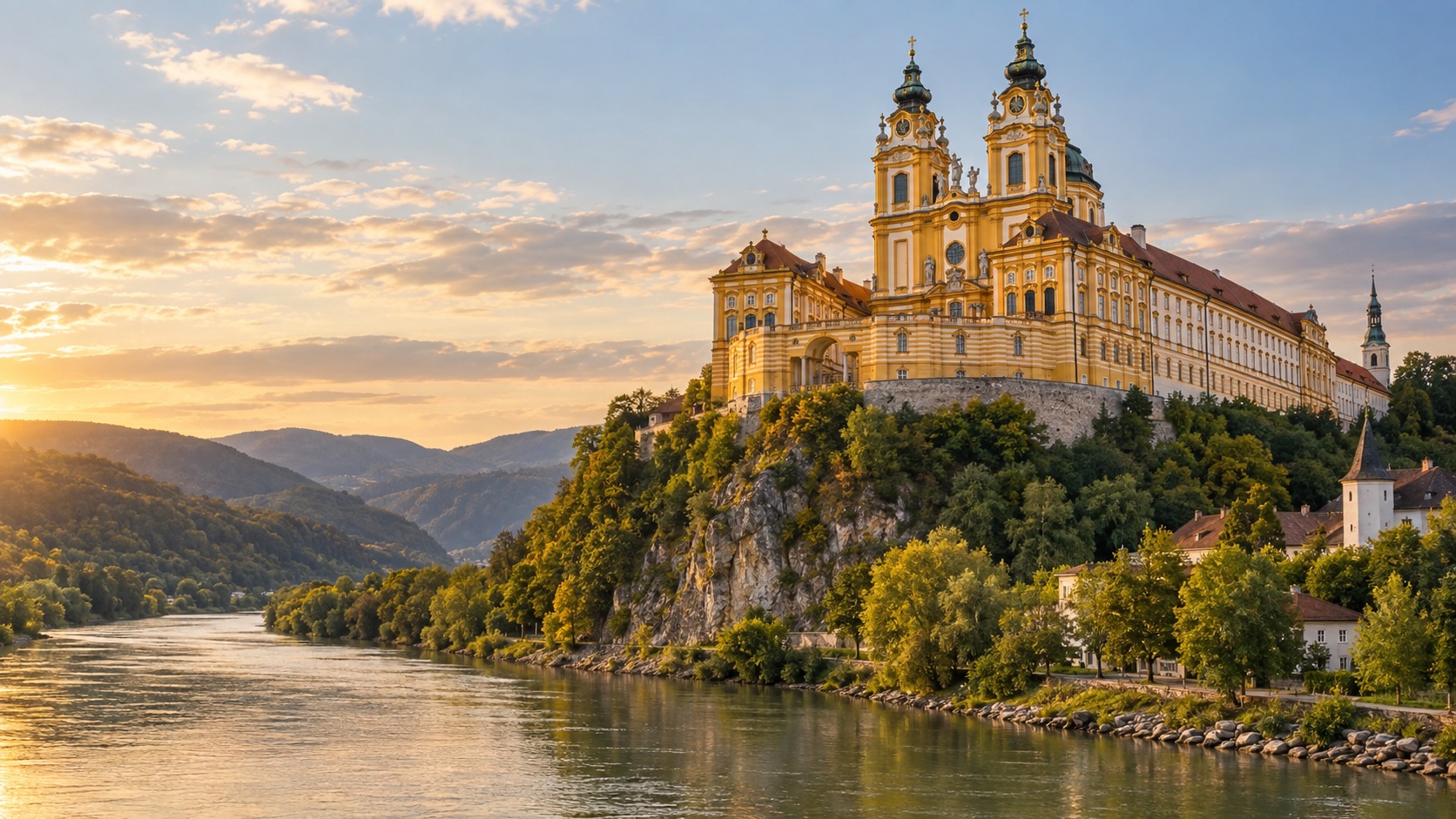
A working Benedictine monastery on a rock above the Danube, and the largest Baroque abbey complex in Austria.
From a Babenberg castle to a Baroque library
Melk Abbey's story starts in 1089, when Leopold II, Margrave of Austria, handed one of his own castles on this rock over the Danube to Benedictine monks from Lambach Abbey. For centuries it was a working monastery like many others in the region — until the fifteenth century, when it became the centre of the "Melk Reform," a movement that reinvigorated monastic life across Austria and southern Germany.
The abbey most visitors see today dates from much later. Between 1702 and 1736, architect Jakob Prandtauer rebuilt the entire complex into a single, unified Baroque statement — high above the river, meant to be seen from the water and the road alike. Prandtauer died before the work was finished; his colleague Josef Munggenast completed it. A fire in 1738 damaged parts of the new building, but the repairs held, and the abbey church was formally consecrated in 1746.
What's actually worth seeing inside
The abbey is still an active Benedictine monastery and a school, not a museum, which shapes what's open to visitors and when.
The library
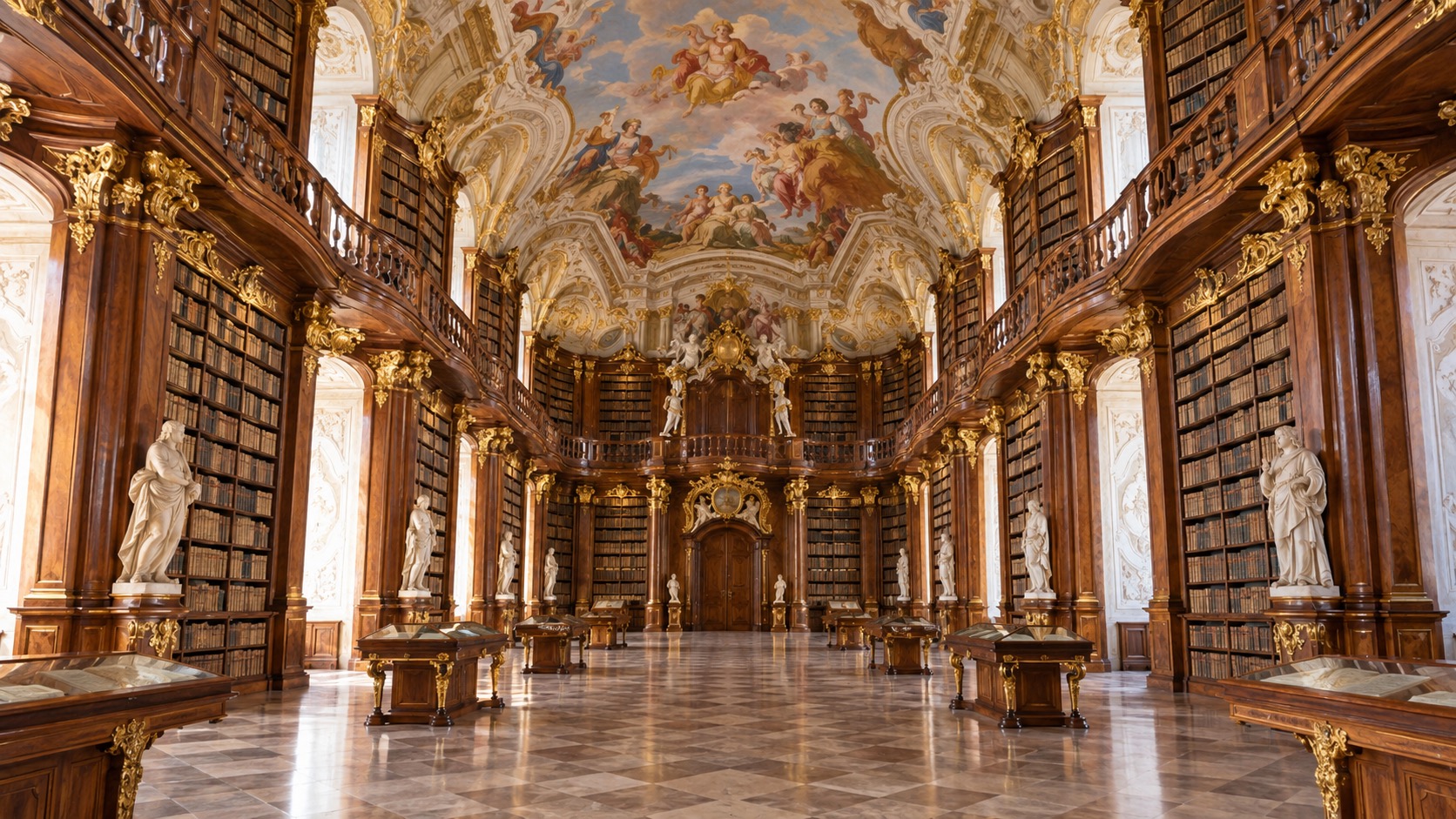
This is the reason most people climb the hill. Melk's Baroque library holds a collection built up over nine centuries, arranged under a ceiling fresco, in a room designed to make the books themselves feel like part of the architecture rather than storage.
The abbey church
The interior is full-strength Baroque — gilding, marble, and a dome fresco — consecrated in 1746 after the post-fire repairs, and still used for services rather than kept purely as a showpiece.
The terrace
Between the library and the church, an outdoor terrace looks straight down onto the Danube and the start of the cycle path — the same view Prandtauer was building toward when he decided to put the abbey's public face on the river side of the hill.
Visiting if you're about to start (or just finished) riding
Melk town sits below the abbey, and the climb up is short but genuinely steep — worth doing before you get on the bike rather than after 36 km, if you have the choice. If you're riding to Krems, seeing the abbey first thing means you start the flat, mostly-downhill stretch with the hardest climb of the day already behind you.